Reducing user risk in staking to grow Cosmos ecosystem at early stage Emeris

How I designed a staking feature from ground up reducing financial user risk

Overview

Emeris provides a single interface for a fragmented blockchain landscape, enabling users to earn passive income through staking

Domain DeFi, B2C, B2B
Timeline 3 weeks
Platform Web

My role and impact

Led complete design of staking feature in 3 week sprint, collaborating directly with PM and Engineering to launch Emeris's core feature. Starting with competitive and user research, I designed the complete experience that enabled users to earn passive income through staking while supporting PoS network security.

The challenge

Designing for uncertainty, not just functionality

Concentration risk

Staking platforms required choosing one validator for all funds. If that validator had issues user's entire stake was exposed.

Psychological barrier

Users were paralysed by fear, not confused by complexity. The problem wasn't technical complexity.

Unclear validator quality

No clear way to evaluate validator reliability. Unlike traditional finance where banks are regulated, validators in Cosmos operate independently.

Objectives

Business

  1. Increase staking participation to strengthen Cosmos validation and security
  2. Launch before competitors to establish Emeris as go to platform for Cosmos staking
  3. Drive long-term engagement through passive income (staking rewards)

Product

  1. Become first retail platform offering multi validator distribution
  2. Enable non technical users to stake confidently without blockchain infrastructure knowledge
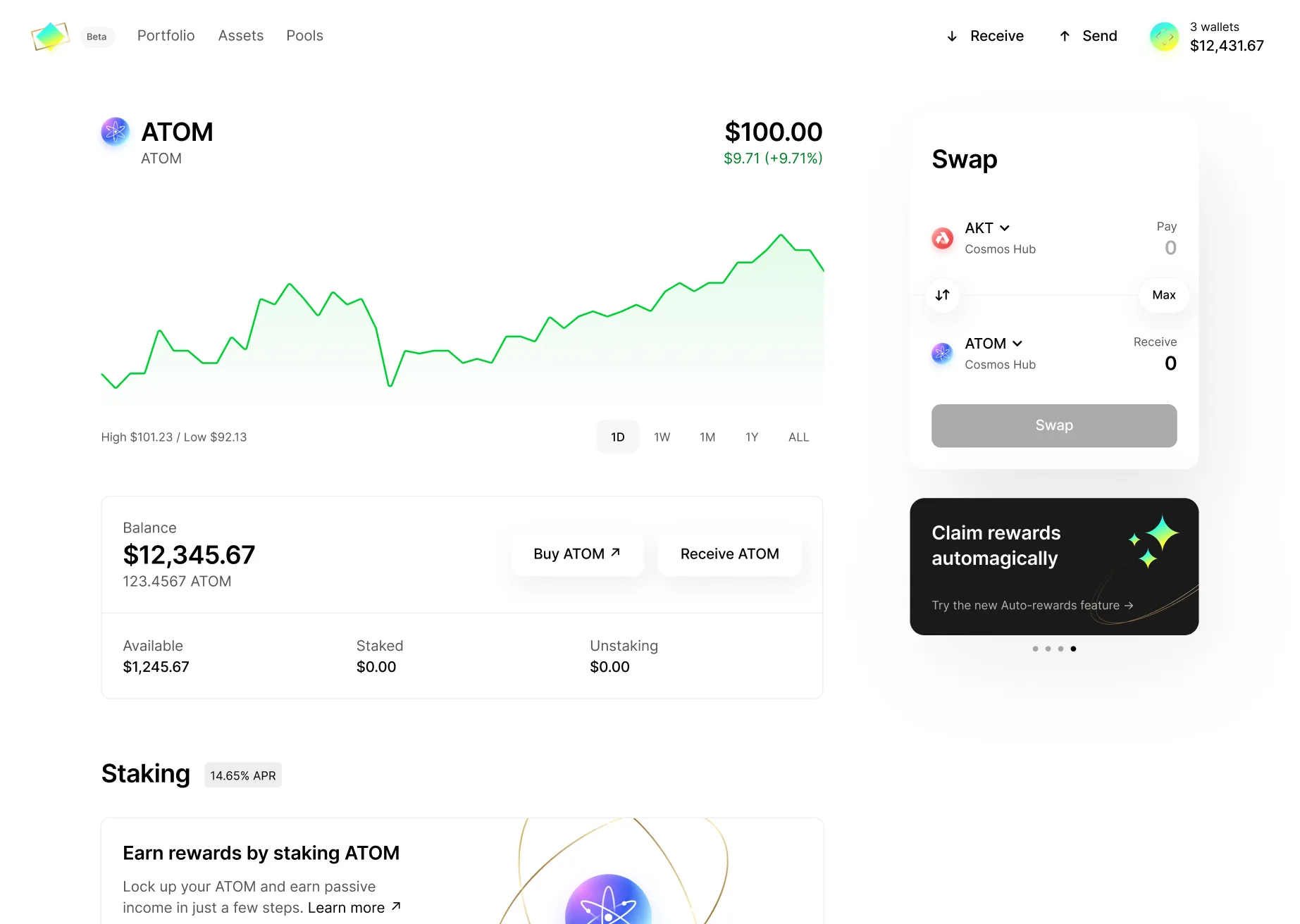
Emeris staking flow overview

Approach

Research under resstriction

With a 3 week timeline and crypto users' privacy concerns, traditional interviews weren't feasible. Instead of waiting for perfect information, I analysed existing forum discussions to identify actionable insights.

This research revealed several barriers

Behaviour

  1. Fear about losing assets
  2. No clear action steps
  3. Invisible locking period

Platform

  1. No hints when something is unclear
  2. Fee structure unclear
  3. Constant modal interruptions

Unexpected insight

I initially assumed users needed validator education. But research revealed they already understood fundamentals they just skeptical and feared making wrong choice.

Personal Experience

I chose an existing platform. Selected a validator that looked reliable. Staked 100% of my intended amount and hit "Confirm"

Then I realised two things

I had just locked my funds for 21 days

This information was somewhere in the interface, but I missed it. The irreversible nature of the decision hit me only after committing

My entire stake was concentrated with one validator

If that validator went offline, got slashed, or underperformed my entire position was exposed. I had no way to distribute risk

My insight

I wasn't a beginner. I understood staking mechanics. But the interface design made it easy to make risky choices without realizing the consequences.

Solution strategy

With no users to validate solutions, I made directional decisions based on research and competitive analysis.

The core question

How to provide a safe and guided user experience reducing user skepticism and increasing confidence?

Decision 1

Step by step flow

Step by step staking flow

Why?

Competitive research revealed most common pattern using modal popup. But in our case we had edge cases with onchain transfers while staking. I considered step by step approach.

Decision

Step by step flow with contextual information at each stage.

Decision 2

Information density

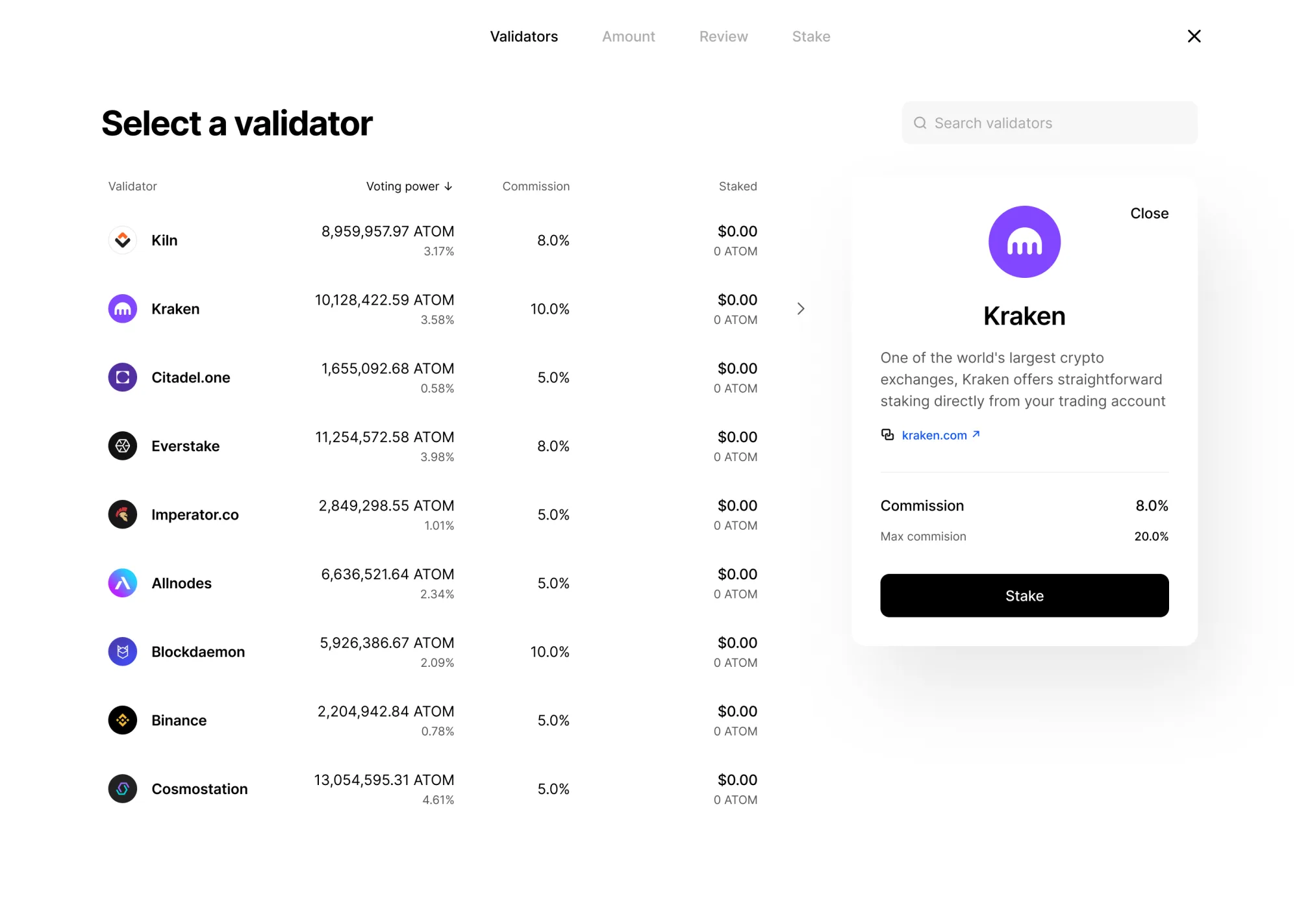
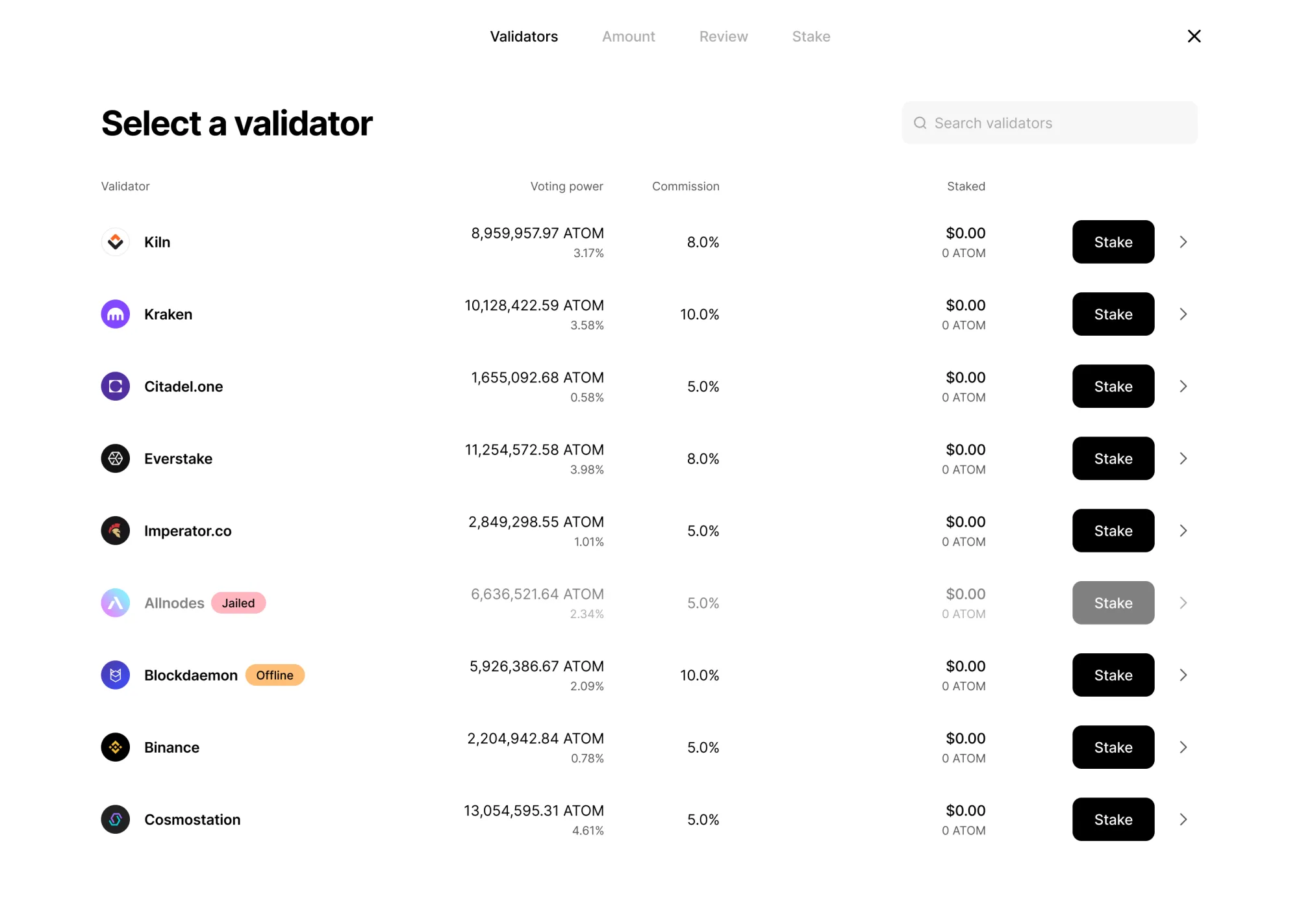
Validator list with cleaned information density

Why?

With no time to validate custom approaches, I leveraged Atomscan, the Cosmos explorer users already relied on, reducing learning curve.

Decision

Familiar structure, cleaner presentation.

Visual improvement

Inline status badges only for problems. Active validators unlabelled reduces noise, focuses attention on exceptions.

Decision 3

Multi validator distribution

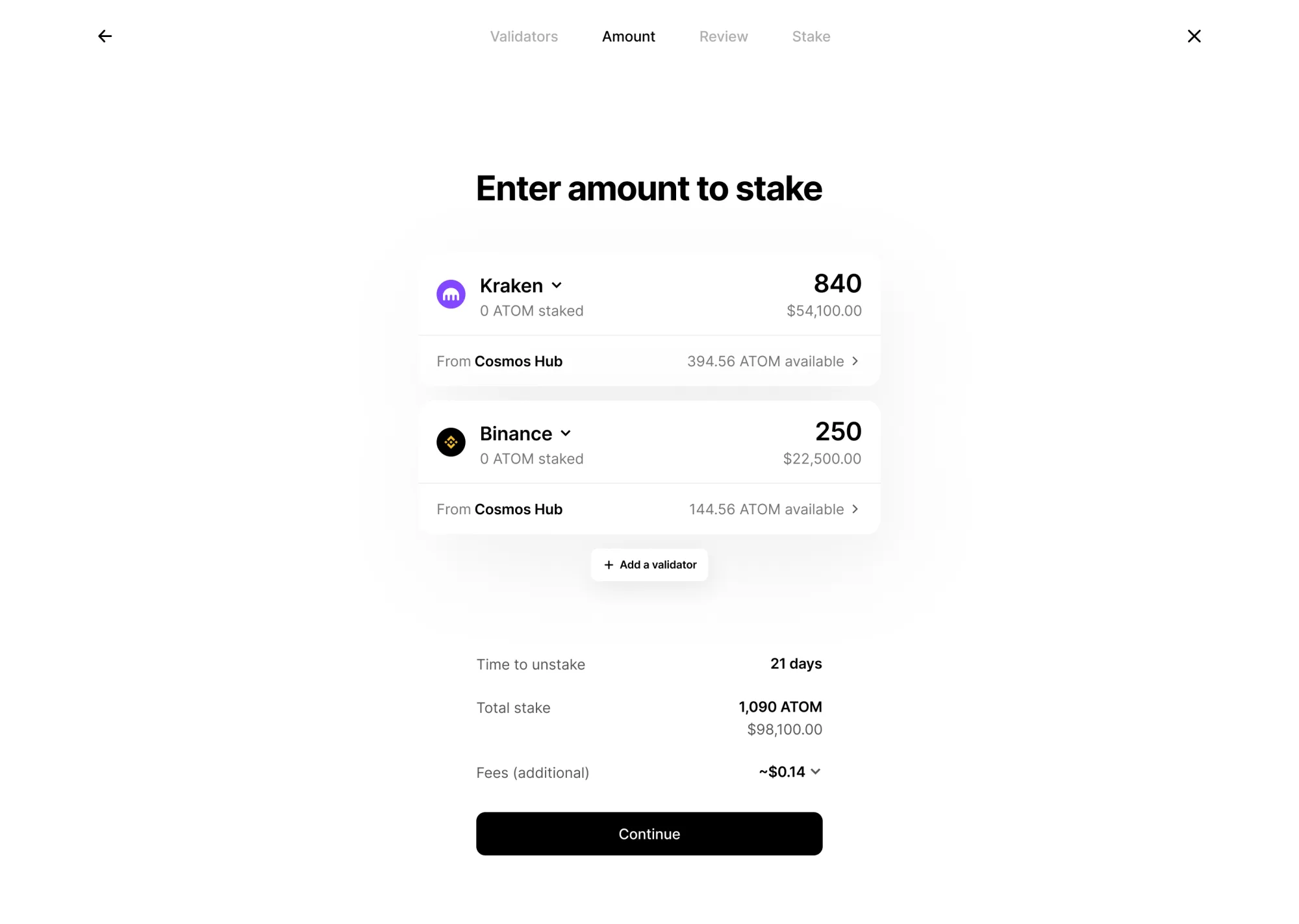
Multi validator distribution screen

Why?

Existing platforms provided only single validator staking. When I staked myself, I concentrated 100% without realising the risk.

Decision

Surface concentration risk and offer distribution as visible option

I designed the flow to make concentration visible. After entering amount, interface shows 100% with one validator then prompts distribution. This reframes multi validator from advanced feature to obvious safety measure.

The further steps would include

Validator education

Expand educational content about validator performance metrics, commission rates, and decentralisation benefits

Portfolio management

Cross chain staking dashboard and unified rewards tracking across multiple networks

However, the timing of the Beta launch coincided with a declining market. At that moment, the leadership decided to postpone further iterations and focus on optimising core revenue generating products.

Lessons Learned

Designing under time constraints

Developing a new product for multiple personas simultaneously makes it challenging to prioritize specific needs and requires constant balancing and trade-offs

Working in uncertainty

Designing a feature without users to validate against requires making directional decisions based on competitive analysis and first principles. Not every decision gets validated with data. Some must be defended with reasoning until launch provides evidence